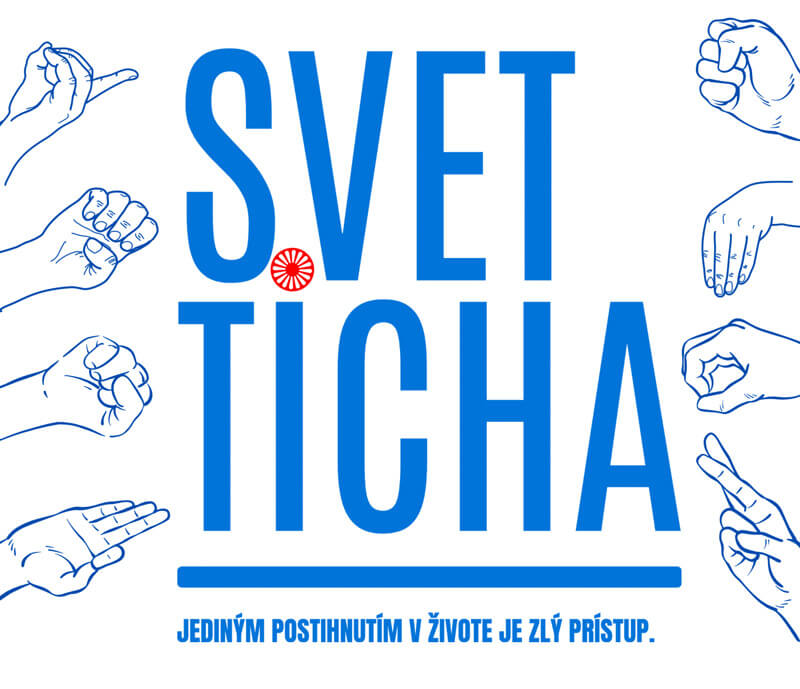

The MARIO – Rights of Deaf Roma project was dedicated to promoting and protecting the human rights of Deaf Roma and raising awareness of the barriers they face in their daily lives.
Deaf Roma are among the most disadvantaged groups in society. In addition to social exclusion and poverty, they encounter communication barriers and limited access to information, education, healthcare, employment opportunities, and public services. Many grow up without access to sign language, leading to language deprivation and deepening social isolation.
The project aimed to document the lived experiences of Deaf Roma, identify barriers to the realization of their rights, and highlight the need for systemic solutions. It combined research, community engagement, advocacy activities, and public awareness initiatives to draw attention to the situation of Deaf Roma in Slovakia.
An important component of the project was the collection of data and first-hand experiences directly from members of the Deaf Roma community. The findings revealed significant gaps in access to information, communication, healthcare, education, and social services. At the same time, they demonstrated the potential of Deaf Roma to actively participate in society when provided with adequate support and opportunities.
The project strengthened cooperation among civil society organizations, experts, community leaders, and public institutions. Its outcomes included recommendations for improving public policies and services to ensure greater equality of opportunity and stronger protection of the rights of Deaf Roma.
MARIO also laid the groundwork for future projects, research initiatives, and advocacy efforts focused on advancing the linguistic, cultural, and human rights of Deaf Roma in Slovakia.
Human rights must be accessible to everyone. The right to language, communication, information, and a life of dignity belongs to Deaf Roma as well.